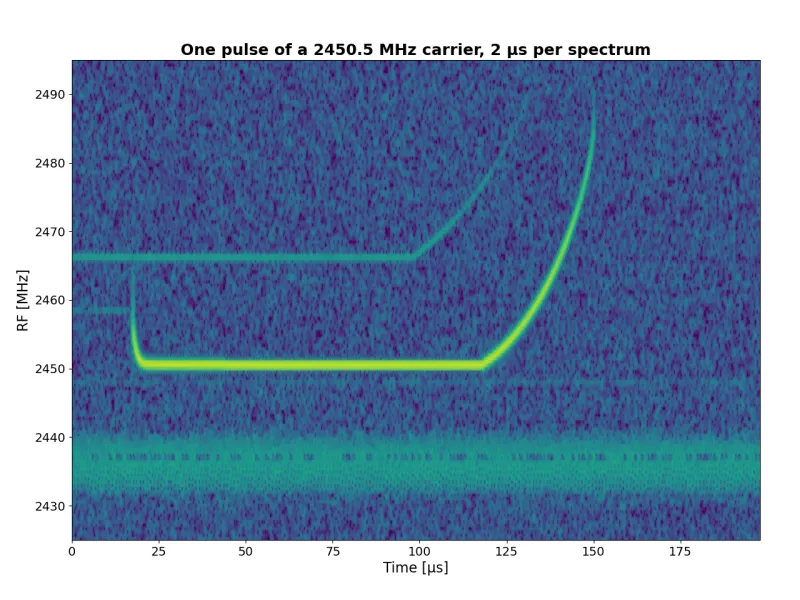
Zooming into a Signal: a VORTARIAN Capture Analysed in Python
Step by step, without RF background: save one capture of the VORTARIAN 4R2T-10G, find a pulse in it, zoom in until its frequency sweep is visible, and read the bits of a Bluetooth packet.
Step by step, without RF background: save one capture of the VORTARIAN 4R2T-10G, find a pulse in it, zoom in until its frequency sweep is visible, and read the bits of a Bluetooth packet.
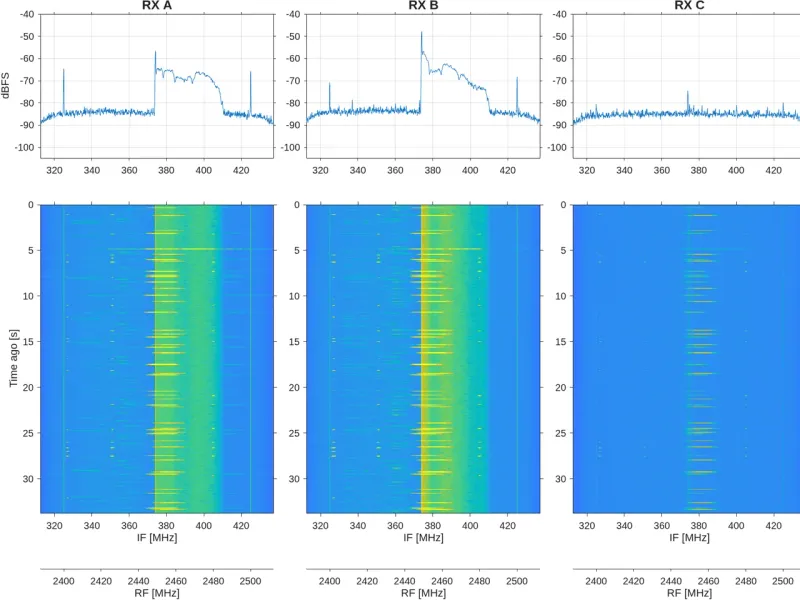
Step by step from a fresh Linux host to a live spectrum and waterfall of all four receive channels of the VORTARIAN 4R2T-10G in MATLAB, with the vortarian MEX file and scripts that use no toolbox.

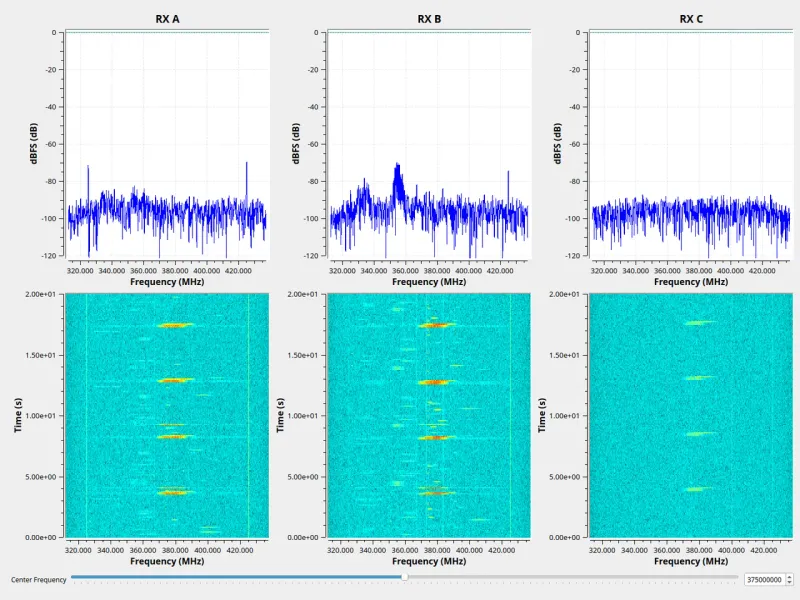
Step by step from a fresh Linux host to a live GNU Radio display of all four receive channels of the VORTARIAN 4R2T-10G: network setup, the SoapySDR driver, the GRC source block and a first flowgraph.

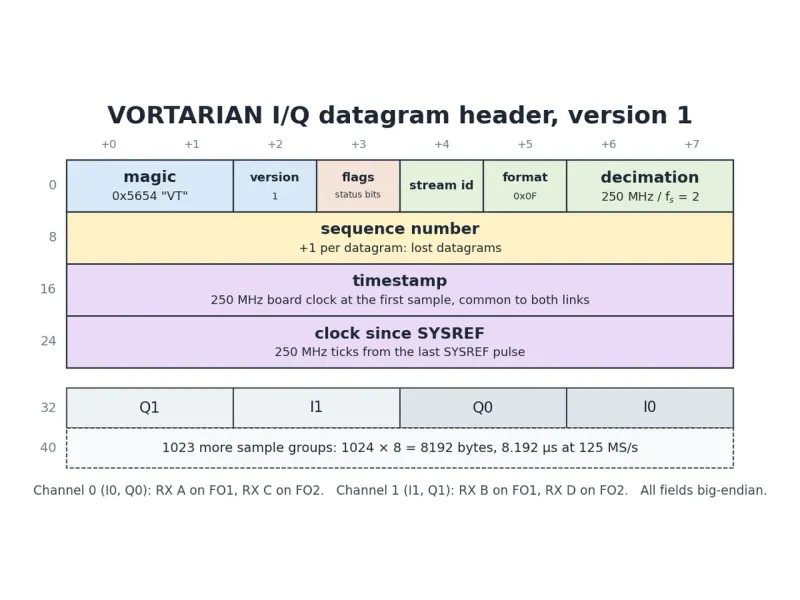
The 32-byte header of every I/Q datagram of the VORTARIAN 4R2T-10G: sequence number, 250 MHz timestamp, clock since SYSREF, flags and the sample layout behind it.

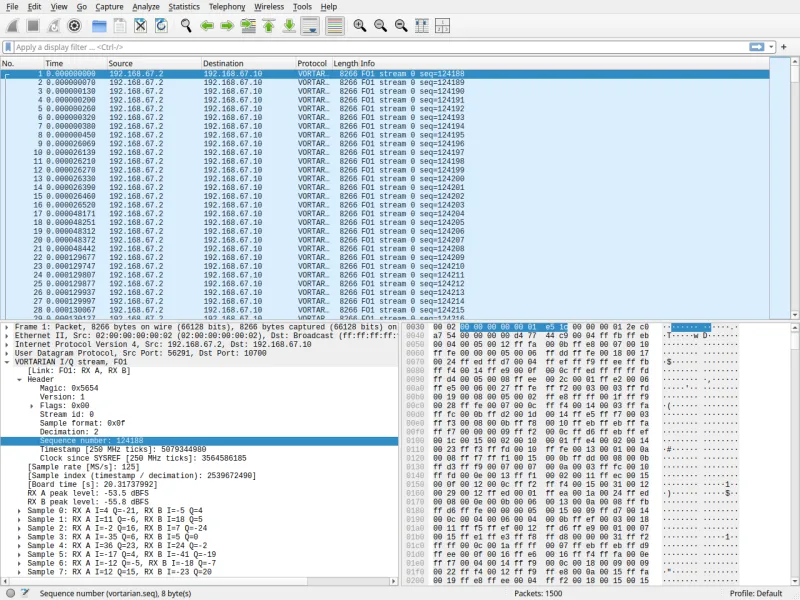
Step by step: install the VORTARIAN dissector in Wireshark, capture the I/Q stream of the VORTARIAN 4R2T-10G and find lost datagrams.

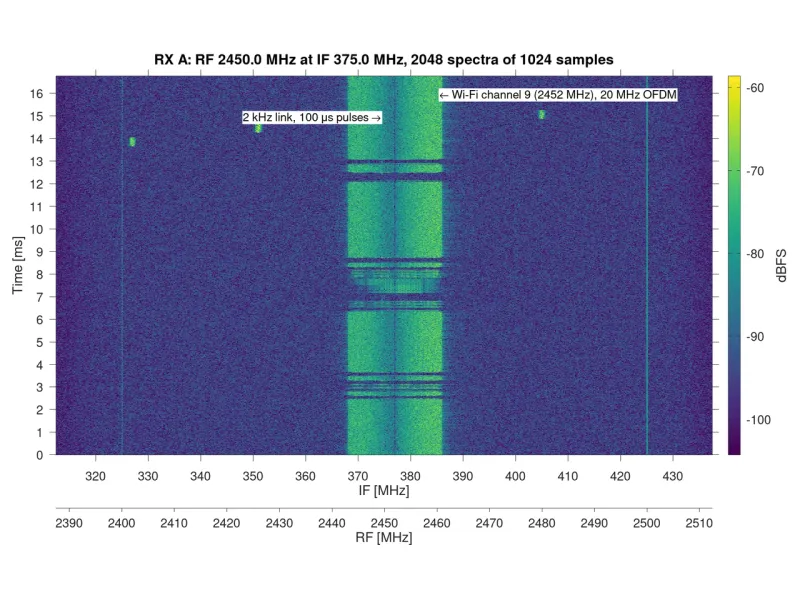
GNU Octave examples for the VORTARIAN 4R2T-10G: contiguous I/Q capture over 10 GbE and calibrated spectrograms of Wi-Fi and Bluetooth traffic at 2.45 GHz.

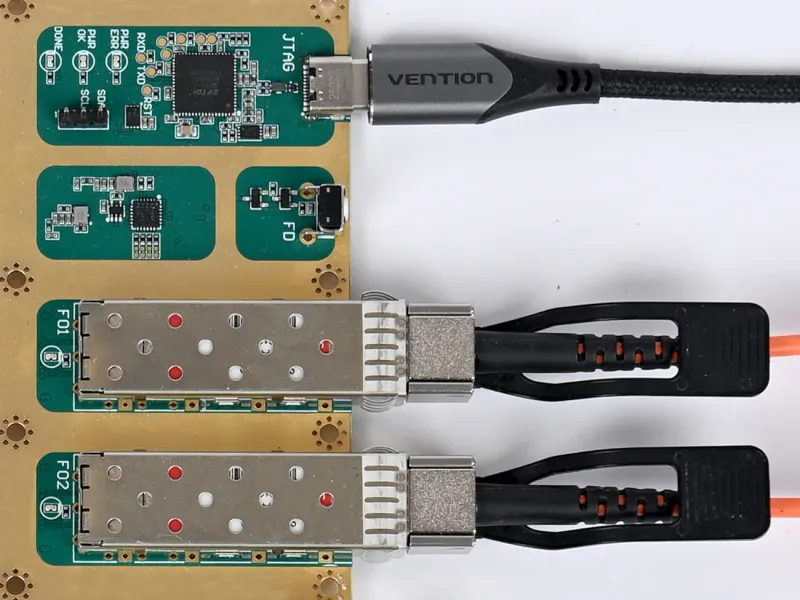
A port-by-port guide to the VORTARIAN 4R2T-10G board: four coherent RF inputs, two RF outputs, a shared 100 MHz reference, trigger I/O and two 10 GbE links for low-latency communication, radar and SDR receivers.

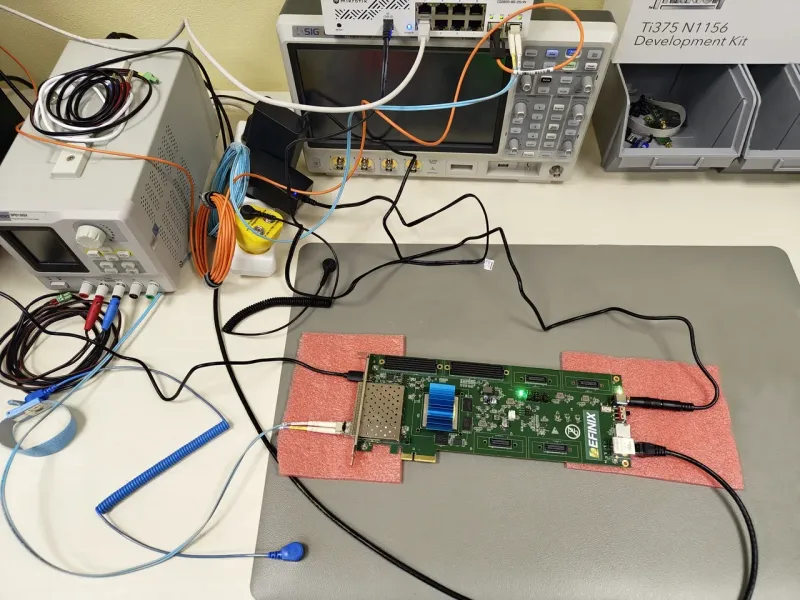
Network cards, switches, SFP+ modules and cables tested with the VORTARIAN 4R2T-10G in long-term streaming runs without UDP packet loss.